Tutorial · ACCV 2026

Constraint Consistent Image Generation:
From Soft Conditioning to Hard Constraints

Tutorial at ACCV 2026, Japan

December 14, 2026 · Room 1008, Osaka International Convention Center

About the Tutorial

Recent advances in artificial intelligence have made it possible to generate highly realistic images directly from text descriptions. Modern text-to-image models, such as Nano Banana, can produce detailed images from prompts like "a red cube on a table." However, despite their impressive visual quality, these models do not reliably satisfy precise logical or structural constraints. This limitation restricts their applicability in domains such as healthcare, education, and scientific visualization, where generated images must consistently satisfy user-specified hard constraints.

This tutorial introduces participants to the emerging field of Constraint-Consistent Image Generation (CCIG), which aims to develop generative models that produce images guaranteed to satisfy specified constraints. We present the different components involved in CCIG, covering:

Drawing on recent developments in controlled image synthesis, knowledge representation and reasoning, and Neuro-Symbolic AI, the tutorial provides both the conceptual foundations and practical tools needed to understand and tackle the problem of constraint-consistent image generation. It is intended for researchers and practitioners in computer vision, generative AI, and AI more broadly who seek to move beyond perceptual quality metrics toward verification based evaluation of generative systems with an emphasis on reasoning about objects, relations, structure, and logical constraints.

Instructors

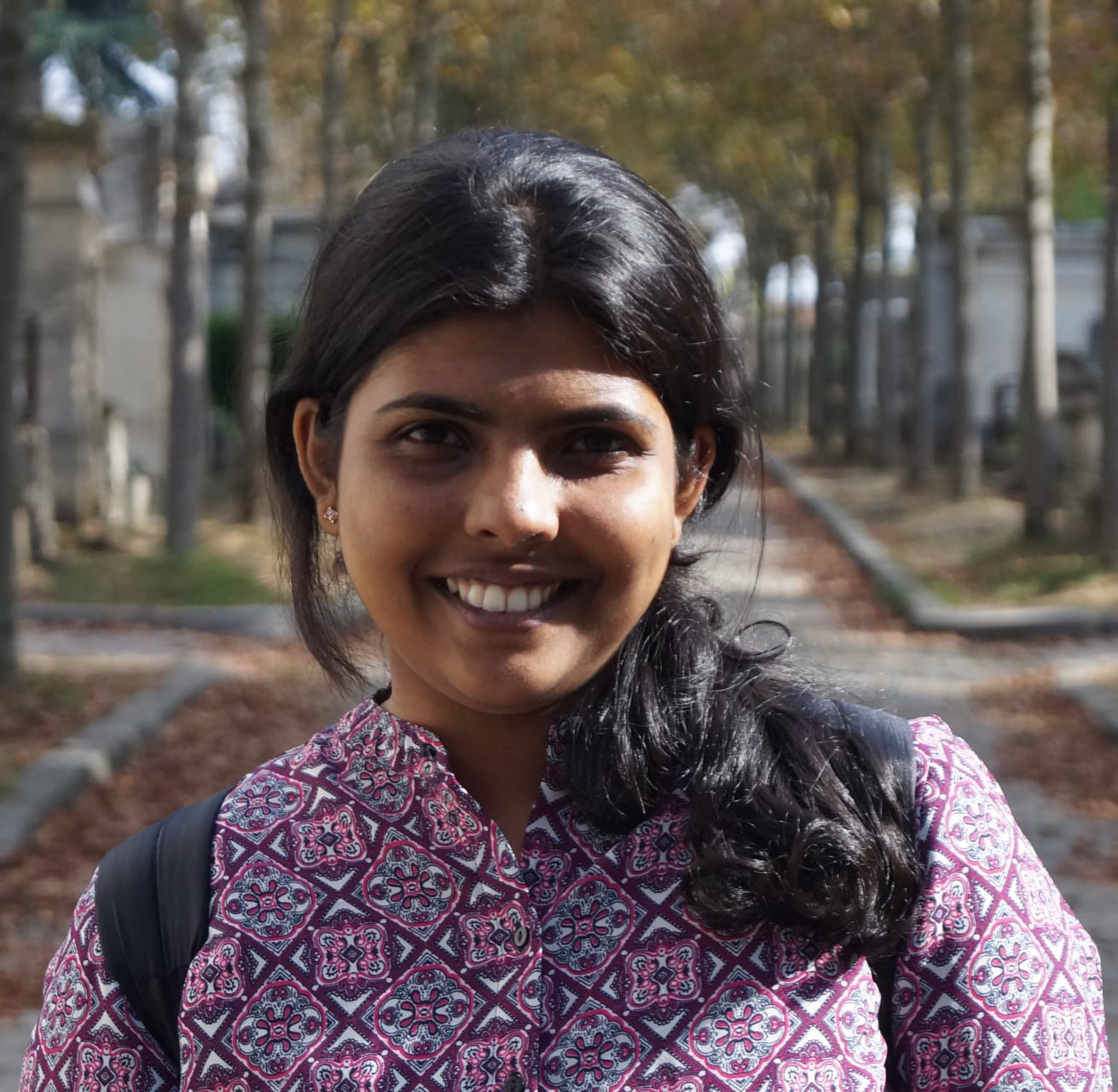
Marjan Alirezaie Marjan Alirezaie
Flybits Labs / Toronto Metropolitan University (TMU), Canada
marjan.alirezaie@flybits.com
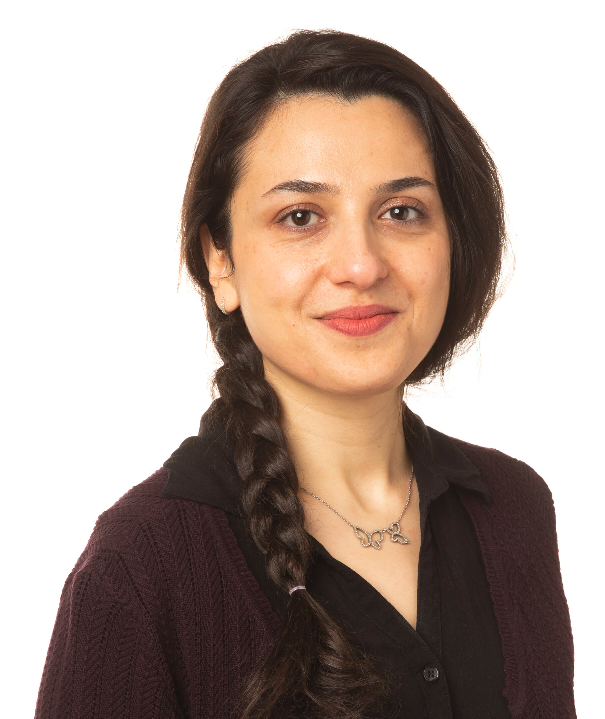
Savitha Sam Abraham Savitha Sam Abraham
City St. George's University of London, U.K.
savitha.sam-abraham@city.ac.uk
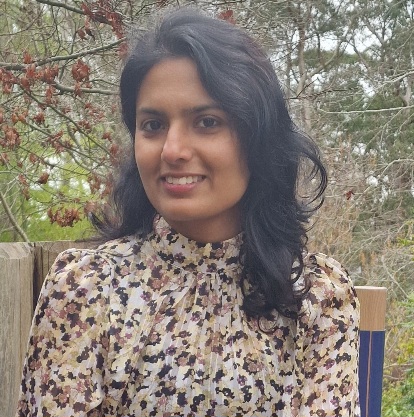
Geethu Miriam Jacob Geethu Miriam Jacob
Glance, India
geethu.jacob@glance.com

Program

Indicative half-day tutorial schedule.

Time Topic
15 minutes CCIG Problem Specification and Motivation
60 minutes Foundations I: Constraint Representation and Reasoning
  • Constraint representation using text and images.
  • Constraint representation with logic: introduction to First-Order Logic (FOL), Answer Set Programming (ASP), and the complexity of constraints, including relational, counting, universal, existential, and conditional constraints.
  • Constraint representation with scene graphs.
  • Introduction to the CLEVR dataset.
  • Hands-on: (1) Represent constraints for the CLEVR domain in ASP; (2) Given a CLEVR image, generate a scene graph using a combination of Grounded Segment Anything Model (GSAM) with attribute detection networks such as ResNet-34, or vision-language models such as Qwen2.5-VL.
10 minutes Break
45 minutes Foundations II: Introduction to Text to Image Generation Models
  • Diffusion models and transformer-based models - basics.
  • Hands-on: Demonstrate how T2I models liek Flux, QwenImage are fine-tuned to generate CLEVR-style images with constraints.
10 minutes Break
30 minutes Foundations II (Contd.): Existing Conditional Image Generation Models
  • Existing conditional image generation models, including recent approaches in neuro-symbolic and constraint-aware image generation.
  • Applications in shopping with GenAI: advanced virtual try-on systems
  • Evaluation metrics for image generative models, with a focus on evaluating constraint satisfaction beyond conventional perceptual quality metrics.
5 minutes Break
30 minutes Future Directions: Neuro-Symbolic Approaches to CCIG
  • Neuro-symbolic approaches to Constraint-Consistent Image Generation (CCIG): key components and challenges.
  • Open research problems and promising future directions.
  • Interesting applications of CCIG in healthcare and pedagogy.
  • Conclusion and discussion.

Target Audience and Prerequisites

The tutorial is designed to be suitable to a wide variety of attendees at ACCV 2026. It targets researchers and practitioners in vision-language models and generative AI who are interested in exploring visual reasoning and Neuro-Symbolic AI, and the integration of these two paradigms. The tutorial aims to provide participants with an understanding of the maturity of the field and emerging research directions. It is suitable for an intermediate audience with no prior experience in formal logic or symbolic reasoning.

Materials (will be updated soon)

Contact

For questions about the tutorial, please contact: savitha.sam-abraham@city.ac.uk
References

  1. Abraham, S. S., Alirezaie, M., & De Raedt, L. (2024). Clevr-poc: Reasoning-intensive visual question answering in partially observable environments. In Proceedings of the 2024 Joint International Conference on Computational Linguistics, Language Resources and Evaluation (LREC-COLING 2024), 3297–3313.
  2. Abraham, S. S., Garg, S., & Dayoub, F. (2025). To ask or not to ask? Detecting absence of information in vision and language navigation. In 2025 IEEE/CVF Winter Conference on Applications of Computer Vision (WACV), 7480–7489. IEEE.
  3. Albinhassan, M., Madhyastha, P., & Russo, A. (2026). Sem-ctrl: Semantically controlled decoding. Transactions on Machine Learning Research.
  4. Avrahami, O., Hayes, T., Gafni, O., Gupta, S., Taigman, Y., Parikh, D., Lischinski, D., Fried, O., & Yin, X. (2023). SpaText: Spatio-textual representation for controllable image generation. In Proceedings of the IEEE/CVF Conference on Computer Vision and Pattern Recognition, 18370–18380.
  5. Chen, H., Li, J., Zhuang, W., Vikalo, H., & Lyu, L. (2026). Training-free layout-to-image generation with marginal attention constraints. In Proceedings of the IEEE/CVF Conference on Computer Vision and Pattern Recognition, 3410–3419.
  6. Christopher, J. K., Cardei, M., Liang, J., & Fioretto, F. (2025). Neuro-symbolic generative diffusion models for physically grounded, robust, and safe generation. In 2nd International Conference on Neuro-symbolic Systems (NeuS).
  7. Dahlgren Lindström, A., & Sam Abraham, S. (2022). Clevr-math: A dataset for compositional language, visual and mathematical reasoning. In International Joint Conference on Learning and Reasoning, 16th International Workshop on Neural-Symbolic Learning and Reasoning (NeSy 2022), vol. 3212, 155–170. Technical University of Aachen.
  8. Esser, P., Rombach, R., & Ommer, B. (2021). Taming transformers for high-resolution image synthesis. In Proceedings of the IEEE/CVF Conference on Computer Vision and Pattern Recognition, 12873–12883.
  9. He, K., Zhang, X., Ren, S., & Sun, J. (2016). Deep residual learning for image recognition. In Proceedings of the IEEE Conference on Computer Vision and Pattern Recognition, 770–778.
  10. Hitzler, P., & Sarker, M. K. (2022). Neuro-symbolic artificial intelligence: The state of the art.
  11. Huang, Y., Huang, J., Liu, Y., Yan, M., Lv, J., Liu, J., Xiong, W., Zhang, H., Cao, L., & Chen, S. (2025). Diffusion model-based image editing: A survey. IEEE Transactions on Pattern Analysis and Machine Intelligence.
  12. Johnson, J., Gupta, A., & Fei-Fei, L. (2018). Image generation from scene graphs. Proceedings of the IEEE Conference on Computer Vision and Pattern Recognition, 1219–1228.
  13. Johnson, J., Hariharan, B., Van Der Maaten, L., Fei-Fei, L., Lawrence Zitnick, C., & Girshick, R. (2017). CLEVR: A diagnostic dataset for compositional language and elementary visual reasoning. Proceedings of the IEEE Conference on Computer Vision and Pattern Recognition, 2901–2910.
  14. Lifschitz, V. (2019). Answer Set Programming (Vol. 3). Springer, Cham.
  15. Naeem, M. F., Oh, S. J., Uh, Y., Choi, Y., & Yoo, J. (2020). Reliable fidelity and diversity metrics for generative models. Proceedings of the International Conference on Machine Learning, 7176–7185. PMLR.
  16. Savazzi, G., Lomurno, E., Sbrolli, C., Chiatti, A., & Matteucci, M. (2025). Neuro-symbolic scene graph conditioning for synthetic image dataset generation. International Artificial Intelligence Symposium, 409–424. Springer.
  17. Shomer-Chai, S., Peng, W., Hariharan, B., & Averbuch-Elor, H. (2026). Color bind: Exploring color perception in text-to-image models. Proceedings of the IEEE/CVF Winter Conference on Applications of Computer Vision, 1916–1925.
  18. Sundaram, S. S., Deepak, P., & Abraham, S. S. (2020). Distributed representations for arithmetic word problems. Proceedings of the AAAI Conference on Artificial Intelligence, 34, 9000–9007.
  19. Qwen Team. (2025). Qwen2.5-VL technical report. arXiv preprint arXiv:2502.13923.
  20. Temsah, M. H., Alhuzaimi, A. N., Almansour, M., Aljamaan, F., Alhasan, K., Batarfi, M. A., Altamimi, I., Alharbi, A., Alsuhaibani, A. A., Alwakeel, L., et al. (2024). Art or artifact: Evaluating the accuracy, appeal, and educational value of AI-generated imagery in DALL·E 3 for illustrating congenital heart diseases. Journal of Medical Systems, 48(1), 54.
  21. Tuo, Y., Geng, Y., & Bo, L. (2024). AnyText2: Visual text generation and editing with customizable attributes. arXiv preprint arXiv:2411.15245.
  22. Xu, L., Du, Z., Mao, R., Zhang, F., & Liu, R. (2020). GSAM: A deep neural network model for extracting computational representations of Chinese addresses fused with geospatial feature. Computers, Environment and Urban Systems, 81, 101473.
  23. Yang, X., Ding, C., Hong, Z., Huang, J., Tao, J., & Xu, X. (2024). Texture-preserving diffusion models for high-fidelity virtual try-on. Proceedings of the IEEE/CVF Conference on Computer Vision and Pattern Recognition, 7017–7026.
  24. Yi, K., Wu, J., Gan, C., Torralba, A., Kohli, P., & Tenenbaum, J. (2018). Neural-symbolic VQA: Disentangling reasoning from vision and language understanding. Advances in Neural Information Processing Systems, 31.
  25. Zhang, S., Qian, H., Ni, M., Li, Y., Ding, W., & Liu, J. (2025). Diffusion model-based size variable virtual try-on technology and evaluation method. Computers & Graphics, 104448.